This quarterly e-publication explores diverse aspects of digital historical collections and provides insights into web-based resources, including the Archive of Americana.

Travel to New Worlds: Reconceptualizing Research and Early America with Early American Imprints

One of the challenges—but also one of the joys—of teaching classes on colonial American literature is that students often enter the classroom with few preconceived notions and little background knowledge in the period.  As my comments on my course evaluations have attested, students are often surprised to find that early American literary study involves not just the Puritans but also the study of authors of various genders and cultural and social backgrounds. Because most students have little prior exposure to early American literatures, my courses must address not only the content matter and themes of the texts but must also teach students to read texts written with unfamiliar literary strategies and for very different audiences than twenty-first century college students.  Early American Imprints, Series I (Evans) and II (Shaw-Shoemaker), offer a treasure trove of documents that introduce students not only to a wide range of texts and topics but also to research skills necessary to study in the Humanities.

Travel to New Worlds: Reconceptualizing Research and Early America with Early American Imprints


Hymns Without Hymnbooks: Tracking a “Late Puritan” Practice

When researching a topic such as the history of eighteenth-century hymnbooks, databases such as America’s Historical Imprints can greatly enhance access to rare materials, but I recently found that research questions also lurk in the digital archive.  Out of curiosity, I did a search for materials listing Isaac Watts (the century’s most popular hymn writer, starting in 1707) as an author in Early American Imprints, Series I: Evans, 1639-1800, to see how early an American edition of Watts would be available in images.  The literature on American hymnody had led me to expect one or two printings in the 1720s, a few more in the 1730s, and an explosion in the 1740s in the wake of the Great Awakening.  My search, however, returned hits going back into the 1710s—with Cotton Mather listed as the author!  I was prepared for the bibliographies to miss a few titles, but how could the database think that Mather had written Watts’s hymns?  By the time I had answered this question, I was well on my way to an article.[i]

Hymns Without Hymnbooks: Tracking a “Late Puritan” Practice


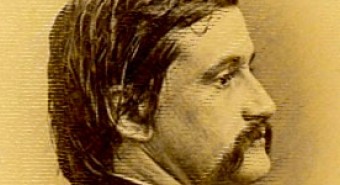
The Resignation of John Russwurm: Individual Lives in Early American Newspapers

Visiting archives to view old documents can stir strange emotions. Handling manuscripts, the historian sees not only the private words of someone else but even a physical presence: the quiver of an elderly hand, the smudge of a young thumb, the jagged strokes of impatient fingers flying across a page during a few minutes of leisure. Reading old books, likewise, the historian sees not just printed words but also their readers, folding down page corners or arguing in the margins—or, in one case I found, pressing maple leaves in the fashion pages of Harper’s Magazine. This intimacy is unpredictable, like contact with living people.

Digitized sources, on the other hand, are uniquely democratic. They are available to researchers working from far away, and they lower barriers in other ways—allowing a scholar, for example, to quickly search mountains of text for a particular phrase, reducing the advantage of veterans who have spent years studying the same documents. The ease of manipulating digital sources makes it possible to study large subject populations and great periods of time. For this, we owe digital repositories a great debt. But it sometimes can be harder to feel the life in digital sources. They do not necessarily make it easy to understand the text as something fashioned and received by living people.

Fortunately, however, technological power also makes it easier to study the lives of particular individuals, including people who were obscure. It can let scholars discover unexpected sources and follow narrow trails through vast quantities of information. If digitized sources are less tangible, in other words, they can also be more biographical.

The Resignation of John Russwurm: Individual Lives in Early American Newspapers


War of the Dictionaries

The Georgian brick building of the Merriam-Webster company on Federal Street in Springfield, Massachusetts, is considered by some world headquarters of the English language.  Scholars, heads of state and judges alike often deem the Merriam-Webster dictionary the final authority in spelling, pronunciation and definition.  That standing is the outcome of winning a long-fought conflict over a century ago. The company’s founders were brothers George and Charles Merriam, young printers who settled in Springfield in 1831 to print and sell books.  Their shop specialized in school books, Bibles and, curiously, wall papers.  The second-floor presses produced titles stocked by stores in Boston, New York and Philadelphia.

A short distance down the Connecticut River from Springfield, Noah Webster of Hartford, Connecticut, had published his American Dictionary of the English Language.  His unwieldy two-volume set was not well received; the figures of intellect in Boston balked at the author’s vision of an American representation of the English language.  With guarded optimism Webster tried a second edition, but found himself with a stack of unsold books and mounting debt.  After his death, his heirs sold the remaining copies and all rights to Webster’s white elephant.  The buyers, the savvy booksellers Merriam, promptly reduced the price.  The move was applauded by the Springfield Daily Republican on January 10, 1845:

War of the Dictionaries


Recent Issues

Twitter @Readex