
"Such women should read, should think, and should act": Women's Special Roles in the American Revolution
In 1780, the newly formed Culper Spy Ring successfully exposed British plans to ambush the French army in Rhode Island. By quickly alerting George Washington to the enemy's plans, the group safeguarded the Franco-American alliance and thwarted a potentially devastating surprise attack. In doing so, the group achieved its greatest accomplishment and secured its legacy as the most successful intelligence network of the American Revolution.
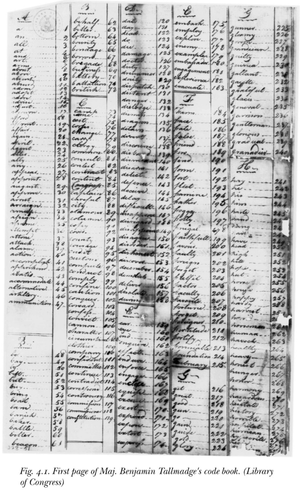
Benjamin Tallmadge established the Culper Spy Ring in 1778 under the orders of George Washington. The goal: to keep a close eye on the British during the Revolutionary War. It tracked the movements, positions, fortifications, and overall plans of British forces in the New York area, including New York City and Long Island.
To do so, the Culper Spy Ring used a numerical substitution code to mask its members' identities and whereabouts. For example, George Washington was referred to by the pseudonym 711. Tallmadge even put together a dictionary to explain the meaning of the codes, written in invisible ink for Washington.
Remarkably, no one ever caught or exposed this group of spies during the five years the spy ring operated. Even Washington was ignorant of the true identities of the spies. The Culper Spy Ring demonstrates revolutionaries' use of concentrated expertise through highly specialized roles. Beyond trained soldiers and officials, the Revolutionary War also relied on ordinary individuals—many of them women—who assumed specialized positions. Some were even spies themselves, staying close to home and lying low through the guise of being homemakers.
There were rumors that an inconspicuous signal was developed by Anna Strong as an aid to the Culper Spy Ring. Word has it that Anna hung a black petticoat on her clothesline, signaling Caleb Brewster, one of George Washington's key intelligence sources, had arrived in town to carry messages back to Washington and Tallmadge.
Besides the petticoat, Anna hung handkerchiefs signifying where Brewster was located. While this string of signals is deemed unverifiable by many local historians, it is fun to imagine how a simple act of laundry could play such a substantial role in the American Revolution. (1)
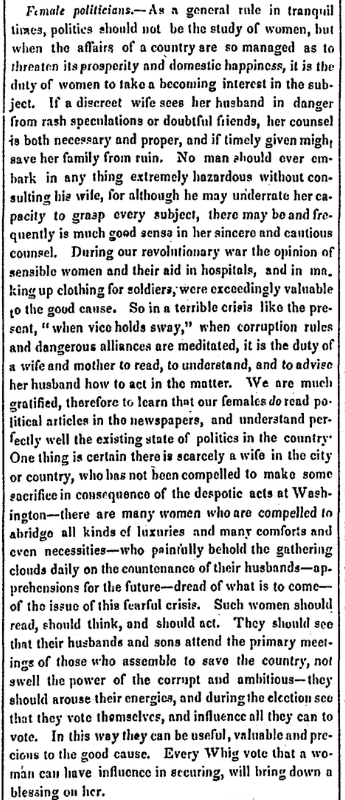
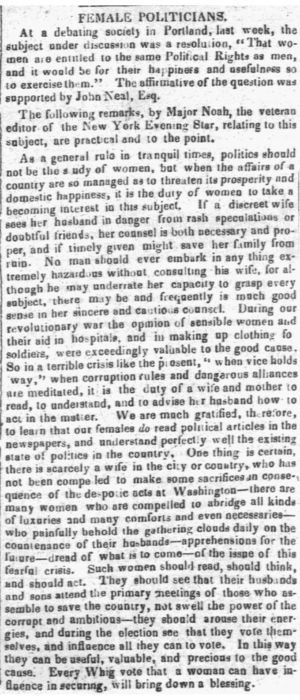
Many women were known for the crucial roles they held throughout the American Revolution. During this period, women played numerous exceptional roles behind the scenes. The Evening Star reports, "During our revolutionary war the opinion of sensible women and their aid in hospitals, and in making up clothing for soldiers, were exceedingly valuable to the good cause."
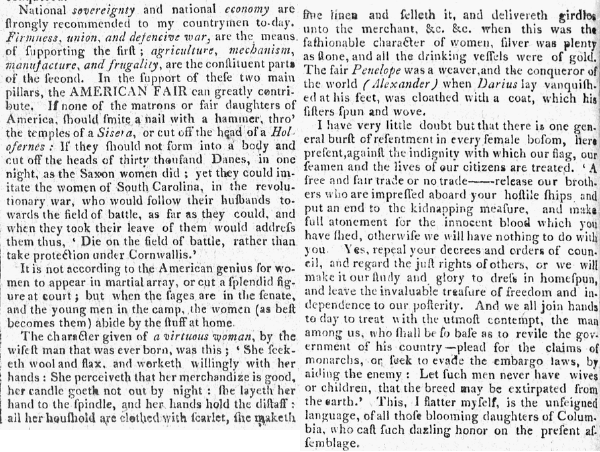
Women physically and emotionally supported their husbands and sons going off to battle. In South Carolina, soldiers' wives would follow their men to the outskirts of the battlefield.
Martha Washington encouraged soldiers during the war and became widely recognized for her positive impact. The Christian Watchman recalls,
She was a strong minded even tempered woman; and the cheerfulness of her demeanor, under the heavy and various anxieties of such a lot as hers, was no mean support to her husband's spirits, and to the bravery and hopefulness of his whole army, whose eyes were fixed upon her.
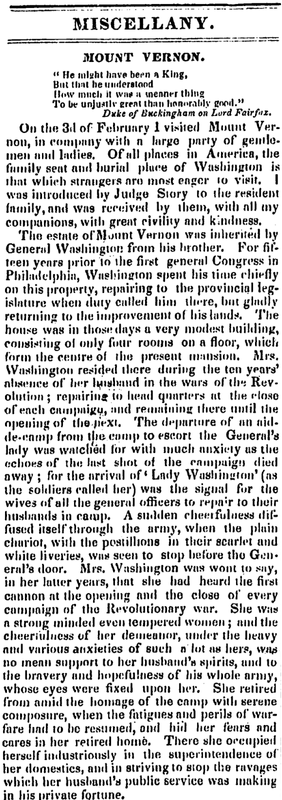
She demonstrated remarkable strength and embodied the vital role American women played in supporting their husbands, brothers, sons, and all men fighting for the cause.
Mothers and wives of the American Revolution took pride in sending strong, courageous men out to war. Everything they did at home contributed to shaping these men into the soldiers they became. An anecdote from "The Spy Unmasked" notes, "nothing great or glorious was ever achieved which women did not act in, advise or consent to."
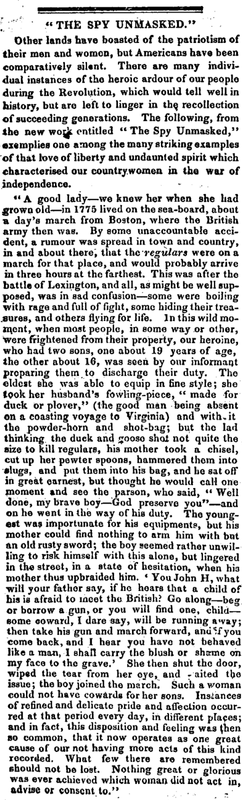
Women held great influence over their husbands' and sons' voting opinions. The New-Bedford Mercury explains,
Such women should read, should think, and should act. They should see that their husbands and sons attend the primary meetings of those who assemble to save the country...and during the election see that they vote themselves, and influence all they can to vote.
It was believed if a woman fulfilled her proper duties, she could indeed be "useful, valuable, and precious to the good cause."
Some women went even further, stepping outside traditional boundaries and taking bold, unconventional roles to aid the Revolutionary cause, such as joining the military.
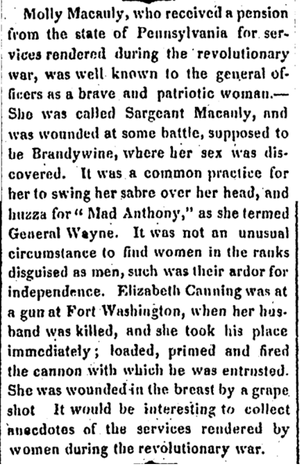
Molly Macaulay demonstrated extraordinary dedication to the Revolution. She joined the army under a male persona and successfully hid her female identity from officers. Her general officers recognized and respected her, and she eventually earned the title of Sergeant. She even earned a pension from Pennsylvania for her service.
Known for her fearless spirit, Macaulay would often swing her sabre over her head and huzza for Mad Anthony, as she termed General Wayne, a practice that revealed her audacious and lively personality. It was not until she was wounded in the Battle of Brandywine that her identity was revealed.
The National Advocate reveals it was not an uncommon occurrence for women to sneak into the military during the American Revolution. In an instance of exceptional bravery, Elizabeth Canning, after witnessing her husband's death, immediately took his place loading and firing the cannons he had been manning.
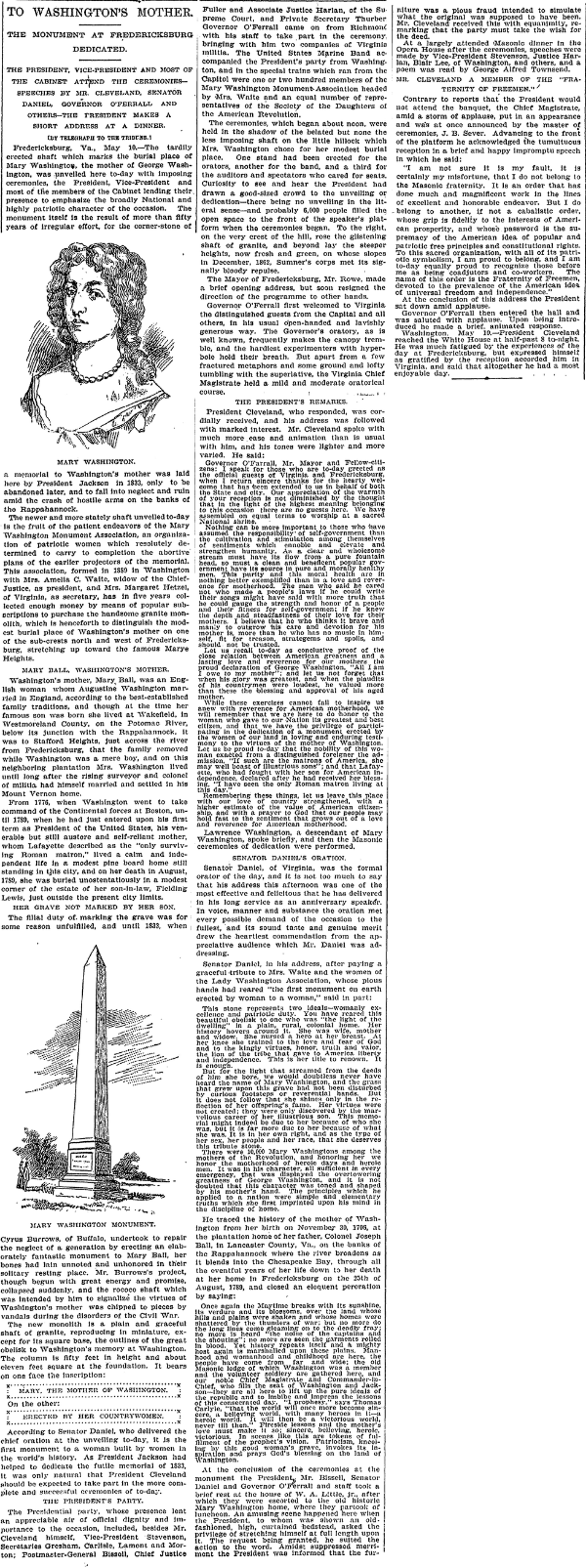
Many dedicated people and historical groups preserve and share the legacies of these women. In particular, the Daughters of the American Revolution, founded in 1890, promotes historic preservation, education, and continued patriotism. Their first action as an organization was fundraising for a statue to honor Mary Washington, the mother of George Washington.
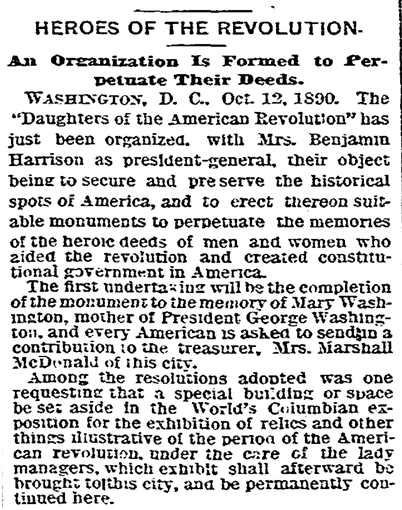
Their fundraising efforts were a success, and the monument was built in Fredericksburg, Virginia, in 1894.
From spies to homemakers to soldiers, women struggled alongside men throughout the American Revolution. These crucial players worked scrupulously to defend their budding country from the inside out. Even when their efforts went unnoticed, men and women acted tirelessly to support American independence.
(1) Culper Spy Ring. The George Washington Presidential Library at Mount Vernon. https://www.mountvernon.org/library/digitalhistory/digital-encyclopedia/article/culper-spy-ring (accessed 11/5/2025)