
Before Bridgerton: How a Real-Life Regency Relationship Fascinated the World
Dearest Gentle Reader,
Since 2020, Bridgerton has captivated the world with its dramatic costumes, Regency estates, and steamy romances. Executive producer Shonda Rhimes has breathed fresh life into Julia Quinn’s novels, often diverging from the original text. While audiences largely embraced the multiracial cast and expanded character backstories, one recent change sparked significant controversy.
The Season 3 finale introduced Michaela Stirling, replacing the much-anticipated Michael Stirling. This gender swap sets the stage for a same-sex central romance, prompting some viewers to threaten a boycott. However, same-sex partnerships—particularly among upper-class women—were not unheard of during the Regency era. Queen Charlotte even persuaded King George III to grant a royal pension to the "Ladies of Llangollen," Lady Eleanor Butler and Sarah Ponsonby.
Their story began in Ireland in 1768. Eleanor, sixteen years Sarah’s senior, was hired to teach the orphaned girl, and the two formed a deep bond over the following decade. By 1778, they faced a crisis: marriage. At 40, Eleanor was considered a "spinster," while 23-year-old Sarah faced intense pressure to find a suitable husband.
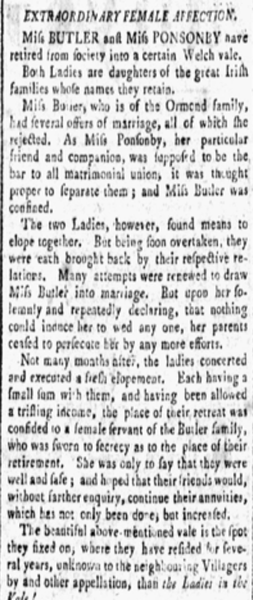
Unwilling to submit to societal expectations, the pair attempted to run away together. Their families thwarted a series of escapes, but they finally succeeded with the help of Sarah’s maid, Mary Caryll. The unconventional story of their “retirement from society” and quiet life in the countryside is discussed in the New-Work Daily Gazette in 1790.
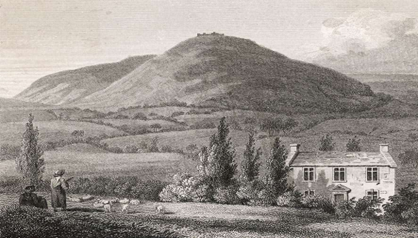
After a brief period of travel, the couple settled in the Welsh countryside near the village of Llangollen. Despite limited funds, they purchased a small cottage named Plas Newydd ("New Hall"), then spent years expanding the property into a Gothic retreat, employing local staff, and hosting a revolving door of distinguished guests.
Despite their modest income, the couple’s home became a cultural hub. They entertained luminaries such as Anna Seward, Percy Shelley, Lord Byron, Sir Walter Scott, and political leaders such as the Duke of Wellington. Several poems were written about or were dedicated to them, including Wordsworth's “To the Lady Eleanor Butler and the Hon. Miss Ponsonby” and Anne Seward’s poem “Llangollen Vale.”
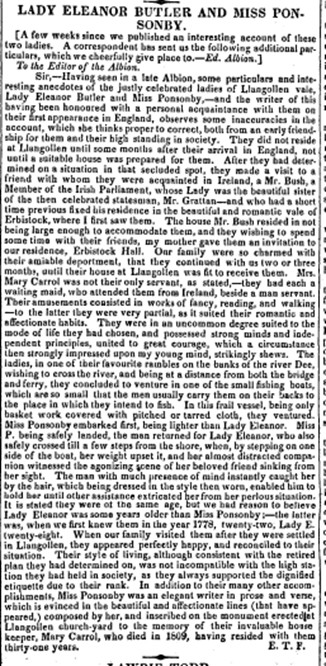
In addition to entertaining guests, they spent hours reading, painting, and taking long walks. According to this 1830 article, “...they were in an uncommon degree suited to the mode of life they had chosen…”
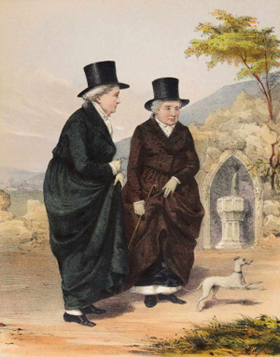
Scholars have long debated the exact nature of their fifty-year relationship. The couple shared everything: books, glassware, and correspondence that bore both their initials. They dressed in men’s clothing, wore top hats, and kept a dog named Sappho—a nod to the Greek poet associated with female-centered love.
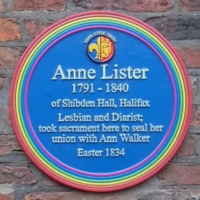
While some peers assumed they lived in a "romantic friendship" or celibacy, their partnership likely inspired the famous diarist Anne Lister to informally marry her own longtime lover.
The women’s fame eventually reached the royal court when, in 1788, Queen Charlotte became fascinated by their story and convinced King George III to grant them a civil list pension, ensuring their financial security.
Eleanor passed away in 1829, and Sarah followed in 1831. Today, they rest together at St. Collen’s Church, and their home remains a public museum—a testament to a defiantly unconventional love.
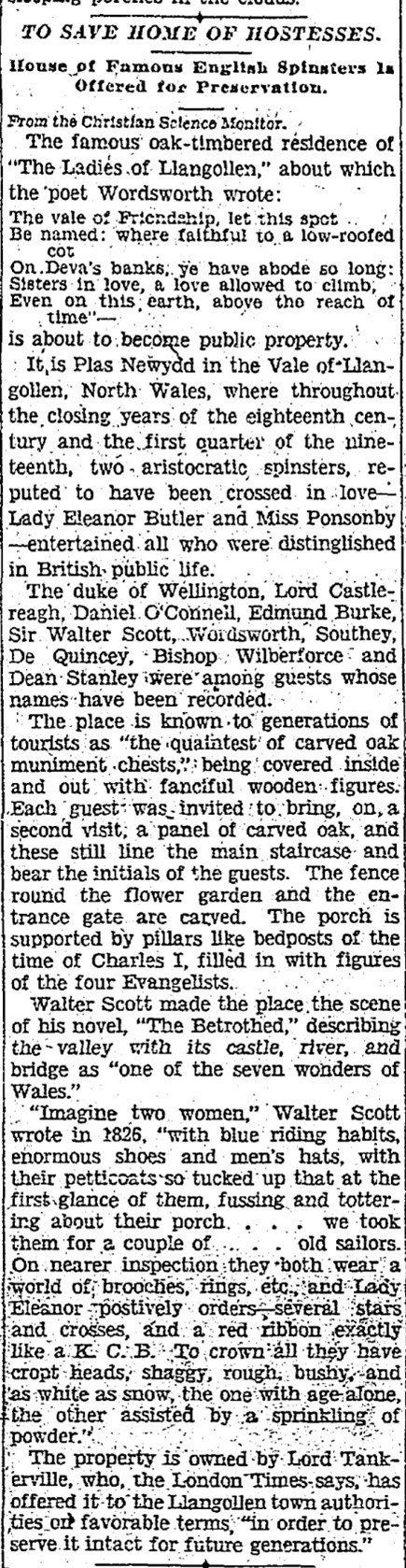
So, you see, Gentle Reader, some love is so great that it reshapes the world around it, like a rock redirects a river; it is unapologetic and unwavering. The bond of the Ladies of Llangollen is just one of many narratives that have shaped our cultural landscape—stories that remain ready for rediscovery within LGBTQ+ Life in America.
 LGBTQ+ people have a long tradition of making significant and enduring contributions to the history of the United States and Britain. LGBTQ+ Life in America brings to light the voices and experiences of LGBTQ+ individuals throughout history.