
Dinner with Victoria: Recreating the 1894 Christmas Feast with Old American Recipes
Industrial class opulence, stark social inequality, and unmatched global influence, this mixture of power and disparity not only reshaped the political and social world but also left enduring cultural impacts that defined the Victorian age.
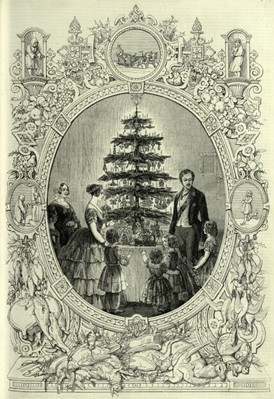
For instance, many holiday customs we take for granted, like decorating a Christmas tree, were not common in early America. Originally introduced by German immigrants, the tradition didn't gain widespread popularity until 1848, when an illustration of Queen Victoria and her German husband Prince Albert's Christmas tree appeared in U.S. newspapers, spurring its popularity.
In January 1849, the Boston Daily Bee published an article describing not only the novel Christmas tree but also the grand feast the royal family enjoyed.
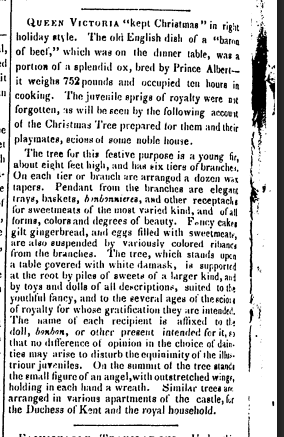
Queen Victoria and Prince Albert added flair to every celebration, including Christmas. Many of the dishes prepared for Christmas dinner were gifts, such as a wild boar's head from the Emperor of Germany, or Foies Gras from the Grand Duke of Mecklenburg-Schwerin.
These were not dishes accessible to the middle and lower classes. However, a curious cook might wonder if it was possible to come close to recreating portions of the 1894 royal Christmas dinner using common cookbooks like those found in Readex's Early American Imprints and Early American Newspapers.
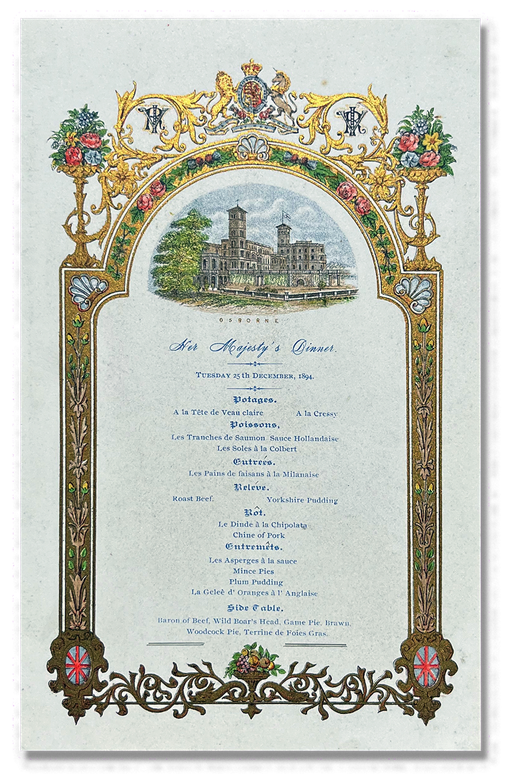
Using the menu from Queen Victoria's 1894 Christmas feast, we see her first course offered a choice of Potage a la Tete de Veau claire, Mock turtle soup, or Potage a la Cressy, a carrot soup flavored with celery and ham. The Queen's former royal chef, Charles Elme Francatelli, created this particular dish.
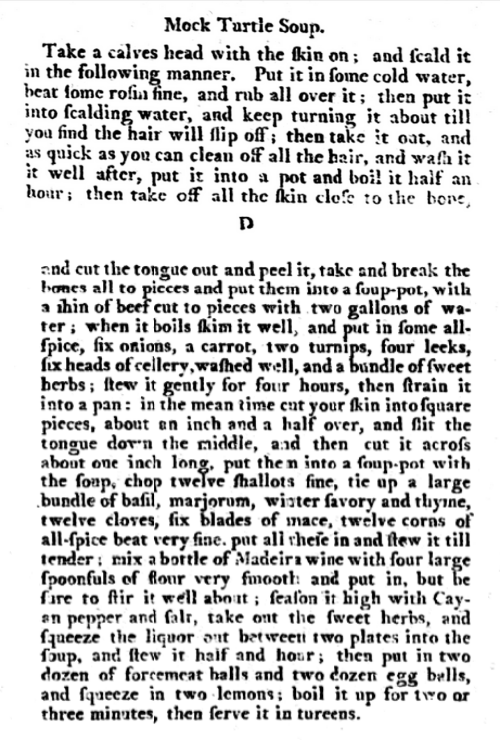
The new art of cookery [...] by Richard Briggs provides his version of a mock turtle soup recipe that requires preparing and boiling a calves' head with some allspice, onions, a carrot, two turnips, four leeks, celery, shallots, mace, basil, marjoram, thyme, cloves, and sweet herbs.
Up next was the fish course featuring "Les Tranches de saumon, sauce hollandaise," Salmon steaks with hollandaise sauce, and "Les soles a la colbert," crumbled fried sole fillets stuffed with tarragon butter.
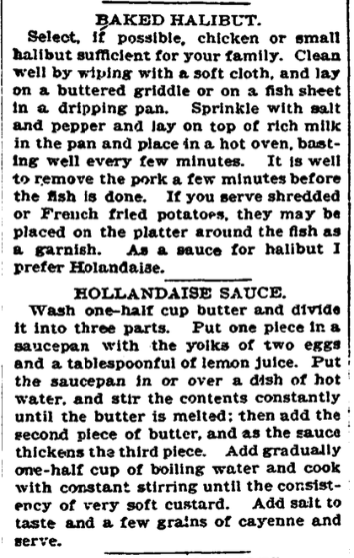
The Trenton Evening Times published an article titled "Good Cookery," providing a similar recipe for "Baked Halibut with a Hollandaise Sauce."
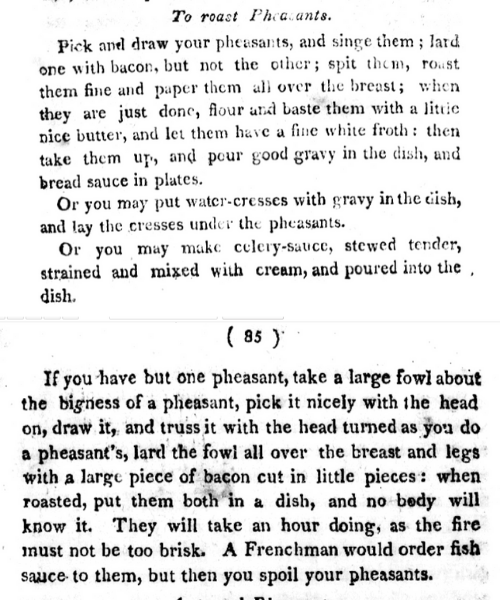
The entree for the evening was les pains de faisans a la milanaise, molded pheasant loaves in a rich sauce. In The art of Cookery made plain and easy, published in 1812, a recipe for roasted pheasant suggests preparing a gravy or celery-sauce for the dish but cautions against "spoil[ing] your pheasants" with fish sauce, preferred by French cooks.
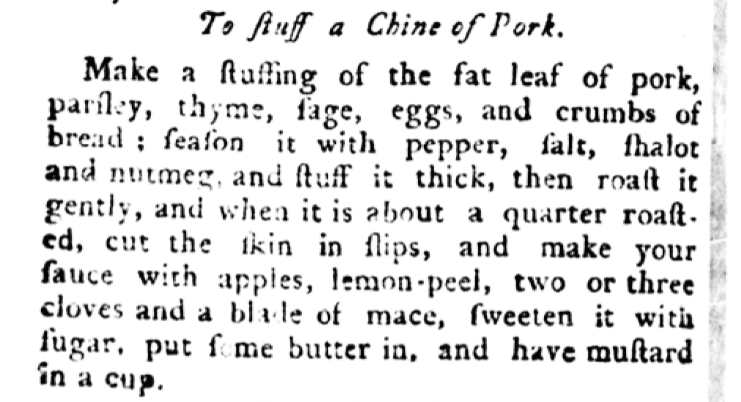
For the roasts and sideboard display the royals served turkey with a rich madeira sauce, roast beef with Yorkshire pudding, and chine of pork, also known as pork loin or backbone roast. This recipe from The Frugal Housewife, or Complete woman cook, printed in 1772, describes the preparation for stuffed chine of pork.
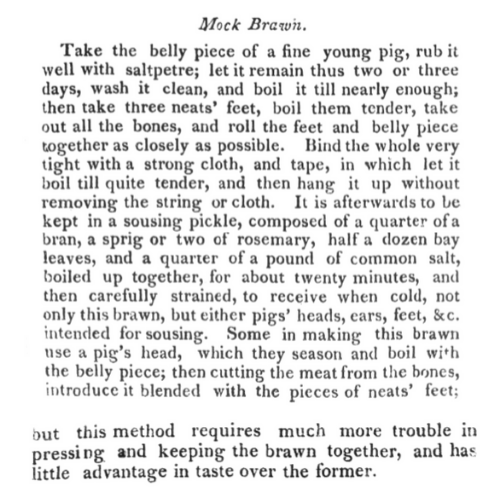
A separate sideboard was filled with dishes served cold: baron of beef, wild boar's head, brawn, foie gras pate, game pie, and woodcock pie. Average early American households often made mock brawn using less expensive and more accessible ingredients than the traditional recipe. One such example can be found in, The universal receipt book [...] by Priscilla Homespun from 1818.
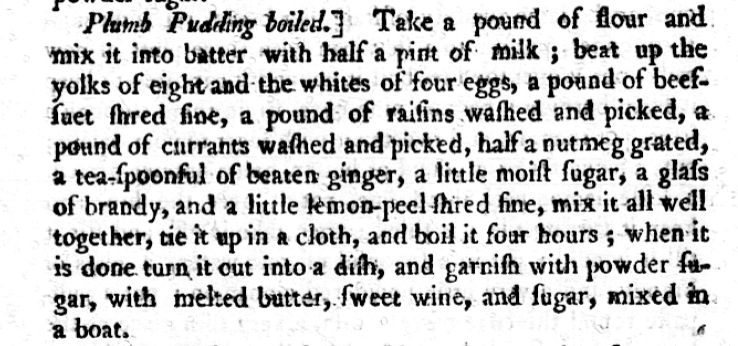
Finally, no Christmas feast would be complete without dessert. "Her Majesty's Dinner" was topped off with mince pies, jellied orange custard, and plum pudding, also known as Christmas pudding. Plum pudding is often soaked in brandy and lit on fire. After the festivities Queen Victoria sent 200 Christmas puddings made at Windsor Castle to her relatives and Europe's leading families. The royal kitchen burned through 24 bottles of brandy to fill such a large request. A similar pudding recipe in, The new art of cookery [...] published in 1798, calls for only a single "glass of brandy."
For many Americans, food often serves as a love language. So, whether you are making a grand buffet featuring wild boar or settling in for some take-out this holiday season, spread some love. And if you are desperately trying to make it through yet another family gathering, Readex's collection of historical cookbooks also has cocktail recipes.
Explore historical cookbooks in Early American Imprints and find more recipes in Early American Newspapers, 1690-1922.