
"It was received with universal shouts of joy": The Declaration of Independence is read aloud across the new United States of America
How did British colonists learn they were citizens of the United States of America in July and August 1776?
The news spread through broadsides enclosed in letters, newspapers passed between neighbors, and proclamations at local meeting houses.
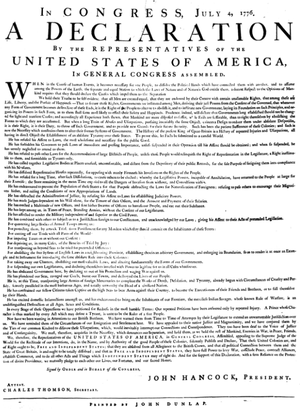
Philadelphia printer John Dunlap published the first copies of the Declaration of Independence—the Dunlap broadsides.
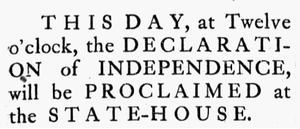
While Dunlap's broadside slowly spread up and down the coast, he printed a notice in the Monday, July 8, 1776, issue of his newspaper, the Pennsylvania Packet, for citizens in Philadelphia and the surrounding communities:
THIS DAY, at Twelve o'clock, the DECLARATION of INDEPENDENCE, will be PROCLAIMED at the STATE-HOUSE.
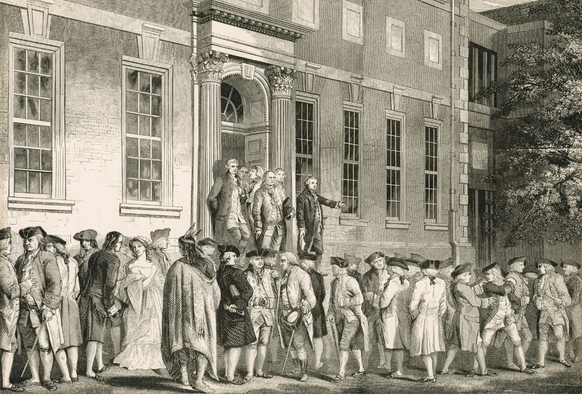
At noon, a crowd of electors as well as people from across the city and county gathered in the warm sunshine on the south side of the Pennsylvania State House. The Sheriff of Philadelphia, William Dewees, stood by as John Nixon, colonel of a battalion of Pennsylvania Associators, read the Declaration of Independence aloud from a Dunlap broadside…The crowd cheered and applauded as Nixon finished reading. The Pennsylvania battalions fired a feu de joie—‘notwithstanding the Scarcity of Powder.'*
Similar scenes, described in newspapers, took place across the new United States.
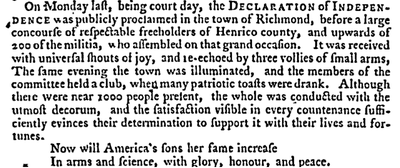
In Richmond, Virginia, "It was received with universal shouts of joy, and re-echoed by three vollies of small arms…"
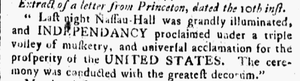
In a letter from Princeton, the writer remarked, "Last night Nassau-Hall was grandly illuminated, and INDEPENDANCY proclaimed under a triple volley of musketry, and universal acclamation for the prosperity of the UNITED STATES."
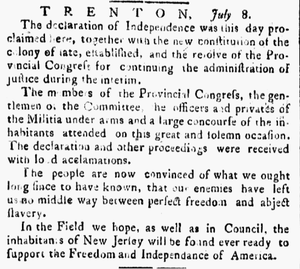
After "The declaration of Independence was this day proclaimed here [in Trenton]," the Pennsylvania Packet reported,
The people are now convinced of what we ought long since to have known, that our enemies have left us no middle way between perfect freedom and abject slavery.
In the Field we hope, as well as in Council, the inhabitants of New Jersey will be found ever ready to support the Freedom and Independence of America.
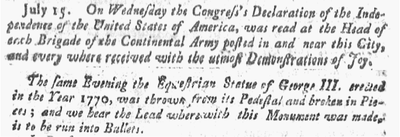
The Continental Army, posted in New York, "received [the Declaration] with the utmost Demonstrations of Joy."
The public readings and newspaper articles generated a sense of national identity and purpose that "…evince[d] their determination to support [the United States] with their lives and fortunes." (Virginia Gazette, above)
250 years later...
On the eve of the semiquincentennial at the ALA Annual Conference in Chicago, Readex recorded librarians, library supporters, and our staff reciting passages of the Declaration of Independence—bringing together many voices from the library community into one reading of the Declaration of Independence to celebrate America's 250th anniversary.
Watch the full reading below or on YouTube.
Uncover reactions to the Declaration of Independence from Boston to Charleston in Early American Newspapers, 1690-1922.
*Sneff, Emily. When the Declaration of Independence Was News. Oxford University Press (2026).