
Licensed to Sin: Women's Public Health and the St. Louis Social Evil Hospital
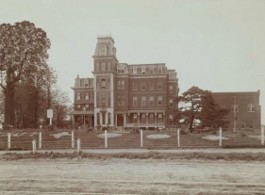
The name "Social Evil Hospital" likely conjures images of a sinister building with dormer windows filled with darkened silhouettes and occupied by the vilest criminals imaginable. You wouldn't be totally wrong — it did in fact have dormer windows.
Built in 1872, in St. Louis, Missouri, the facility originally served as a clinic where female sex workers received testing and treatment for sexually transmitted diseases.
This followed the Social Evil Ordinance passed by the St. Louis City Council on July 5, 1870. Patterned after European legislation, the law recognized brothels as legitimate, regulated businesses.
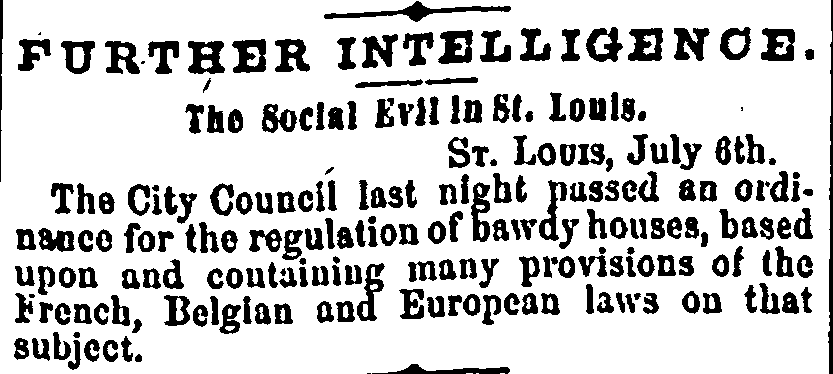
The ordinance required brothels to obtain police licenses and pay fees to the Board of Health. The funds financed mandatory medical examinations giving life to the Social Evil Hospital. While other U.S. cities prohibited prostitution St. Louis' leaders sought to regulate it. The measure initially enjoyed broad support.
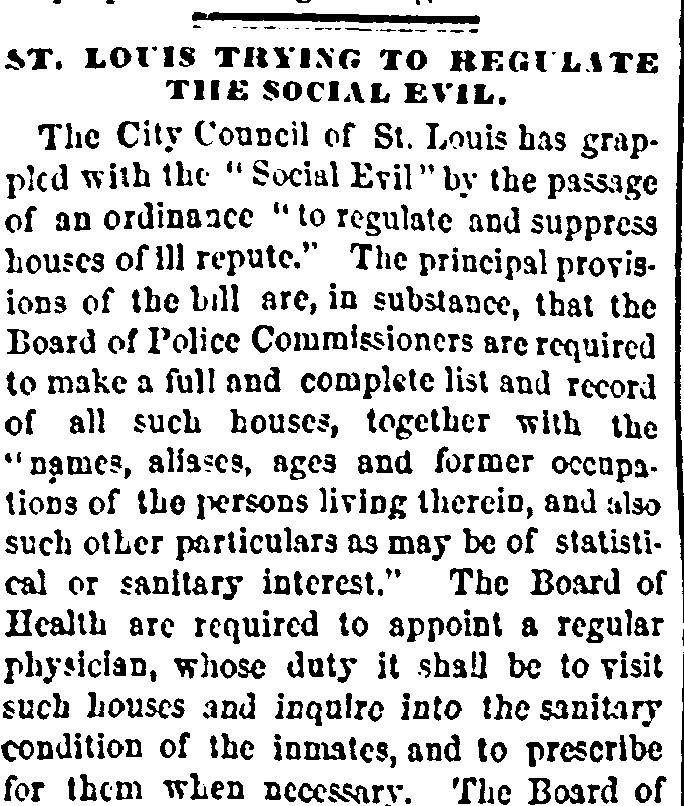
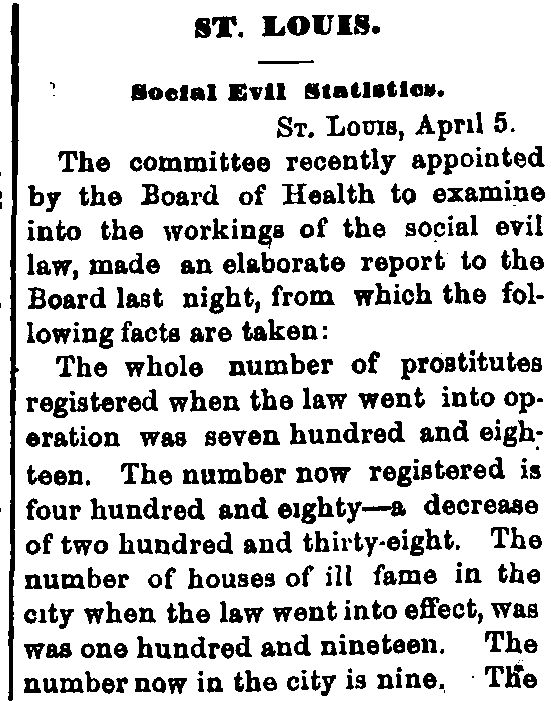
Nine months after the law took effect results were startling: the Lafayette Daily Courier reported the number of registered prostitutes dropped from 718 to 480, while registered brothels plummeted from 119 to just nine.
Officials also tracked why women entered the trade. Of the original group 702 claimed they chose the occupation, 101 cited seduction, 87 blamed mistreatment by husbands, and 57 cited necessity.
Critics, however, argued legalization actually increased patronage by attracting men who would otherwise avoid illegal brothels.
While proponents claimed the law reformed women, the dip in numbers likely stemmed from the high fees and forced examinations. Many women simply returned to unregulated businesses to avoid the city's oversight.
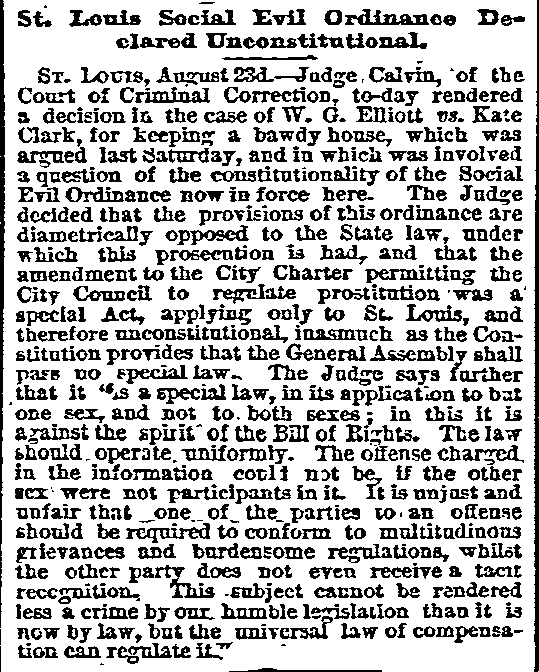
In 1873, Judge Calvin, of the Court of Criminal Corrections, declared the ordinance unconstitutional ruling that the city lacked the authority to pass rules contradicting Missouri state law. The justice also condemned the law as "one-sided," noting that it heavily punished and regulated women while ignoring the men involved, arguing that laws must apply uniformly to all parties.
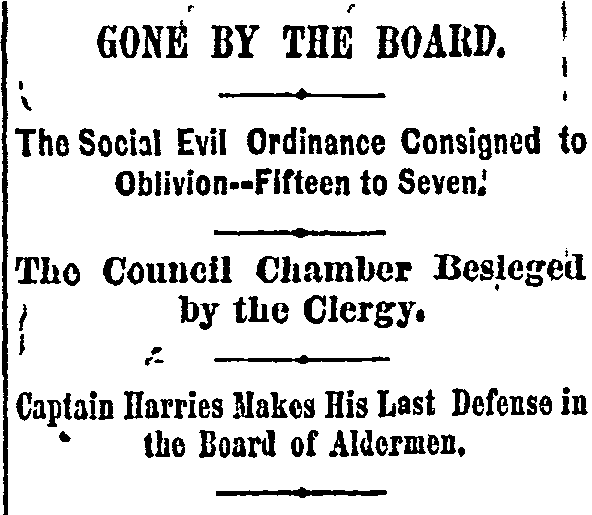
By 1874, the council overturned the ordinance in a 15 to 7 vote, amongst a packed room of spectators. Much to the disappointment of the crowd, little to no debate took place, and what little support the ordinance received was quickly quelled. Within a year, the facility transitioned into the "Female Hospital" and remained open until 1910. The building was demolished in 1915 to make room for Sublette Park.
Today, Nevada remains the only state with legal brothels though they are restricted to specific rural counties and operate under strict licensing and health regulations. Meanwhile, Maine has moved toward partial decriminalization. By targeting consumers rather than workers Maine aims to protect the worker safety while curbing overall demand.
The rise and fall of the Social Evil Hospital mirror a debate that persists today. Whether through the strict regulation seen in Nevada or the consumer-focused laws in Maine, society continues to grapple with the same fundamental question St. Louis faced in 1870: is it better to push 'social evils' into the shadows, or bring them into the light of the law?