"…a crazed negro, a hysterical girl and a yellow journal reporter." The Tulsa Massacre of 1921
On September 30, 2024, The New York Times reported that the Cold Case Unit of the Civil Rights Division of the Department of Justice is conducting a review of the Tulsa Race Massacre of 1921. The purpose of the review according to Kristen Clarke, assistant attorney general for civil rights, is to "issue a report analyzing the massacre in light of both modern and then-existing civil rights law."
The massacre, generally referred to as a "riot" or "race riot" at the time, merits this new analysis. It was one of the most devastating events in the U.S.'s grim history of racism toward people of color.
To establish the context, the Tulsa Historical Society provides an informative background summary:
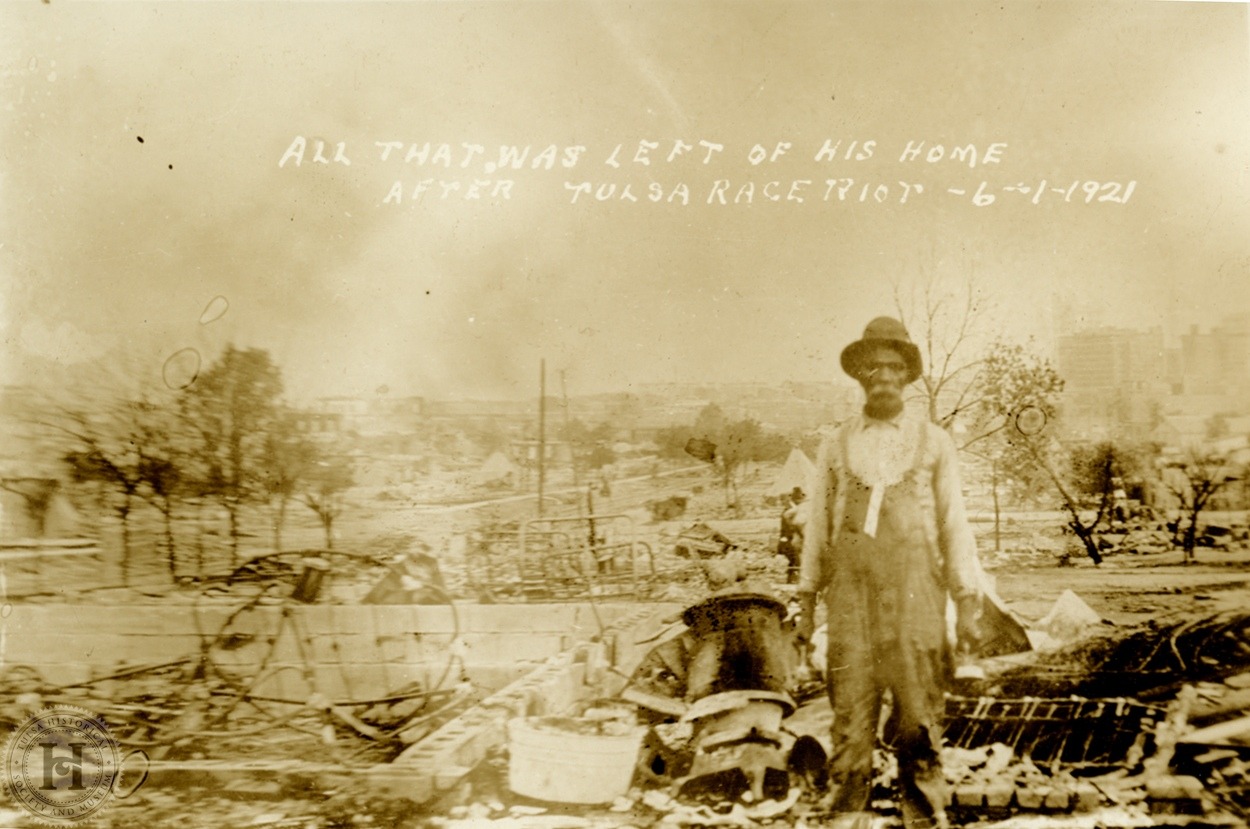
The 1921 Attack on Greenwood was one of the most significant events in Tulsa's history. Following World War I, Tulsa was recognized nationally for its affluent African American community known as the Greenwood District. This thriving business district and surrounding residential area was referred to as "Black Wall Street." In June 1921, a series of events nearly destroyed the entire Greenwood area.
The Tulsa Historical Society and Museum's online exhibit provides further details with a dispassionate account of the massacre.
Newspaper articles from the days following the 1921 Tulsa Race Massacre are presented below, accompanied by this author's commentary. As the first draft of history, newspapers offer a glimpse into the people, events, and issues that shaped the nation. Examining articles from June 1921 provides modern scholars with crucial insights into how Americans perceived and responded to the massacre and its aftermath.
Monday, June 1st
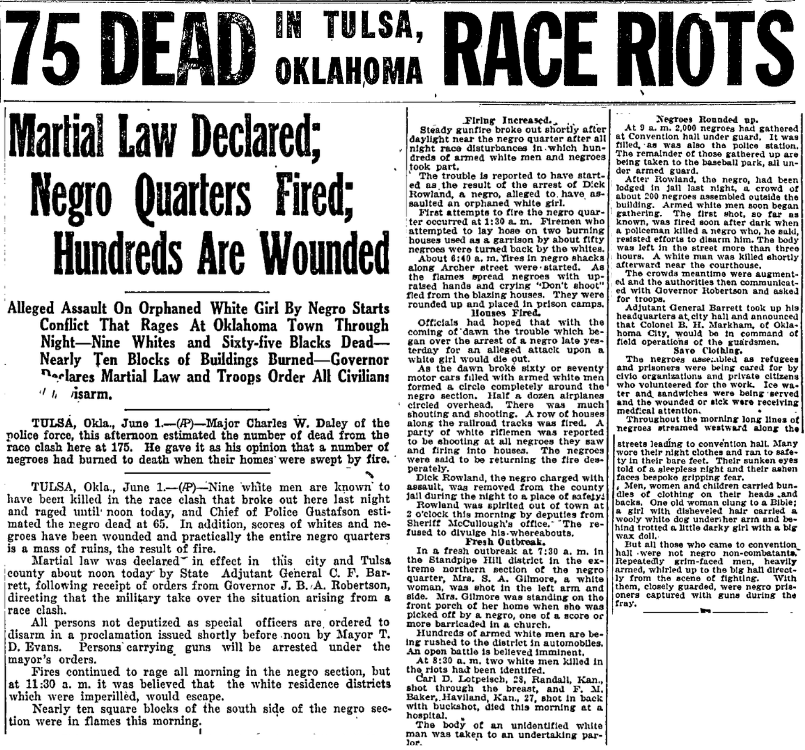
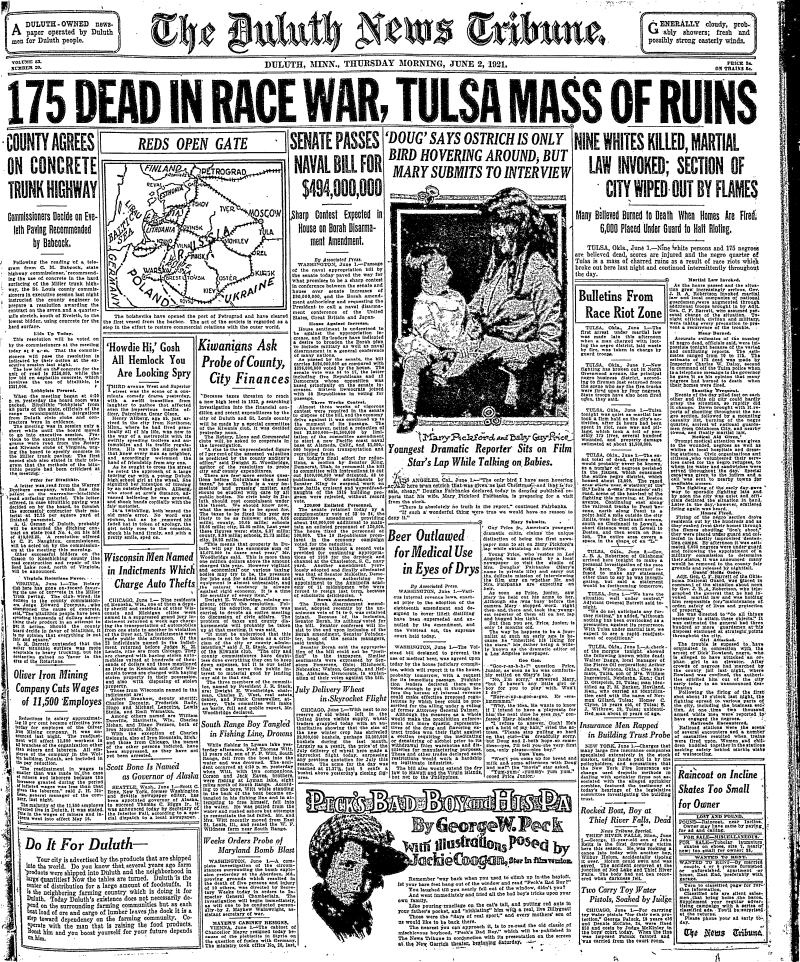
The first published reports of the massacre appeared on June 1st. The Bellingham Herald (Washington) published the wire story from the AP.
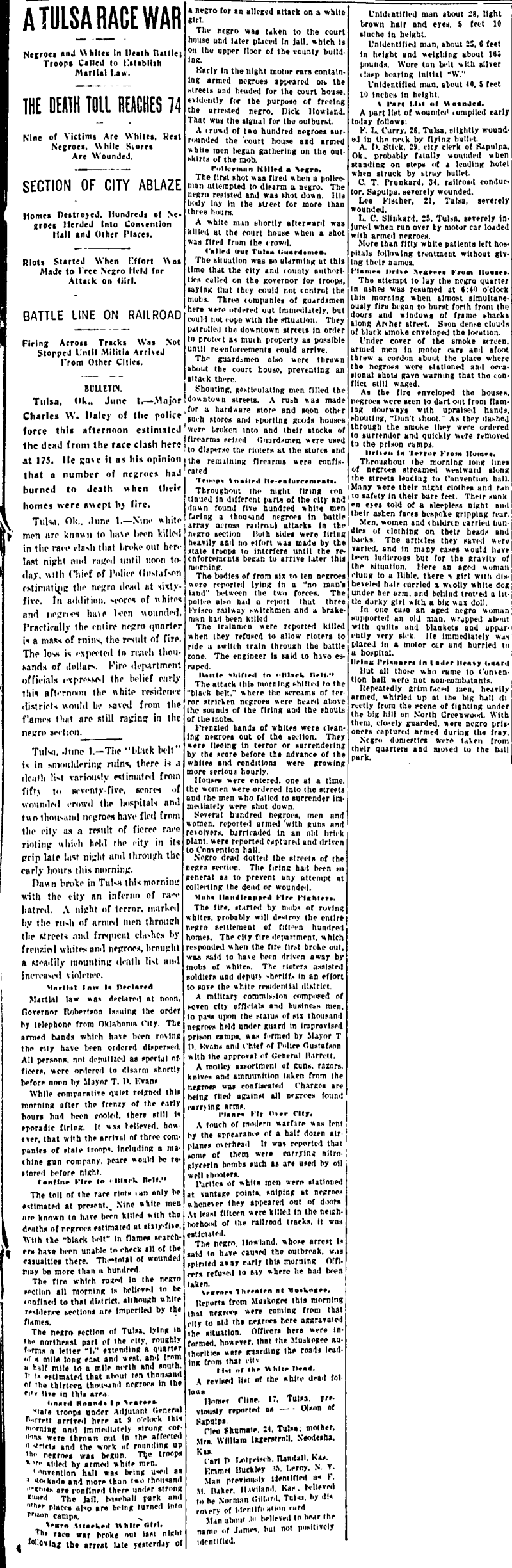
The Kansas City Star published a lengthier account of events with somewhat less incendiary sub-headlines. The alleged assault victim is not defined as an orphan, but she is called a girl in most newspaper stories.
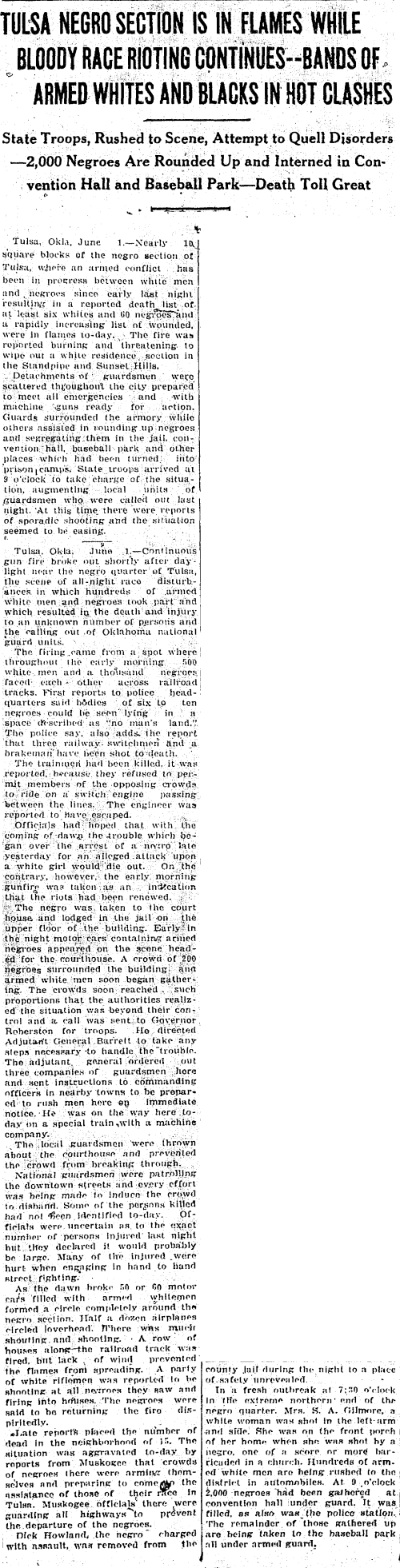
The massacre became a national story overnight and was reported in papers great and small. The St. Albans Daily Messenger, a small-town newspaper in northern Vermont, published a lengthy report which is unattributed but reads like a wire story.
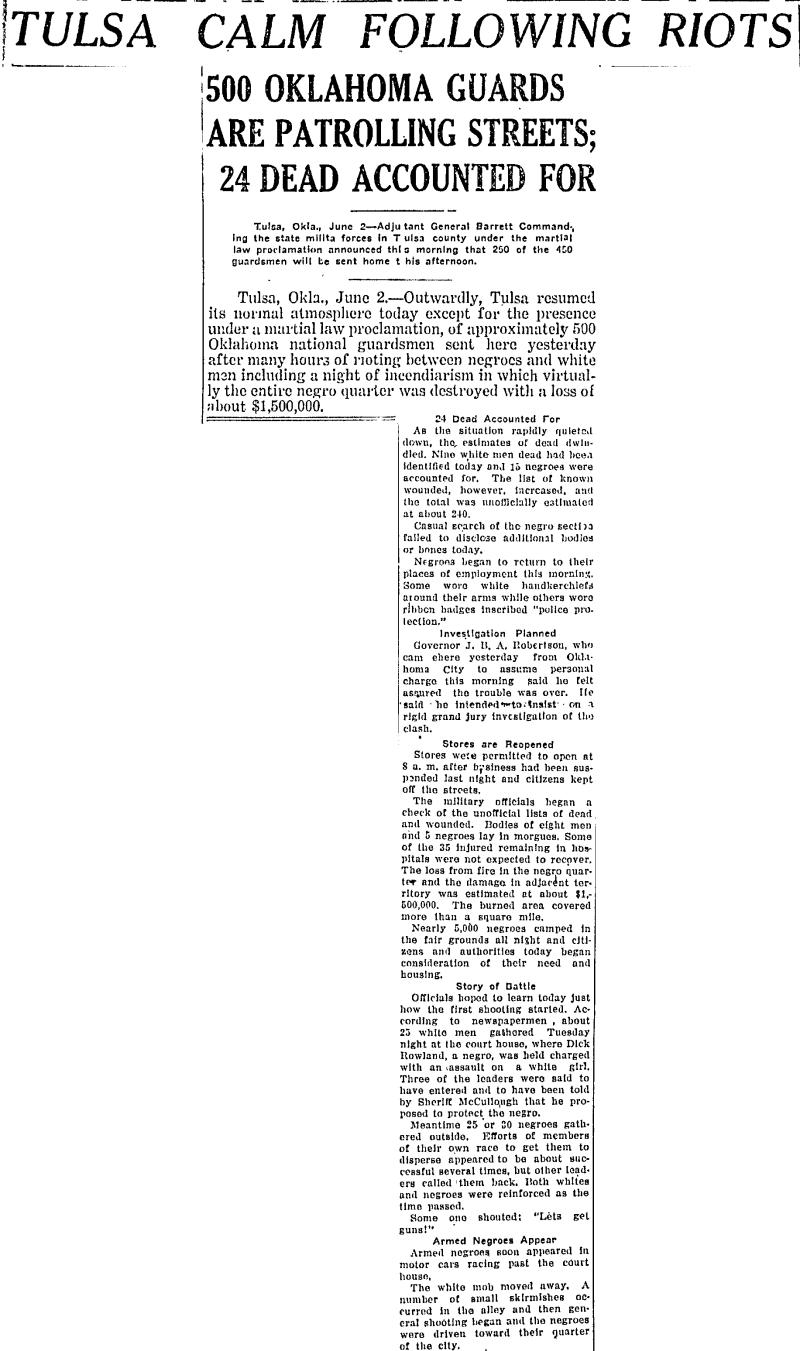
As Tulsa's residents faced the aftermath of death and destruction, newspapers expanded their coverage. The statistics of death and injury and the extent and value of property losses are not consistent in these accounts, but the language reveals the inherent racism of white witnesses and writers. At best, the tone of reportage and editorial opinion is condescending.

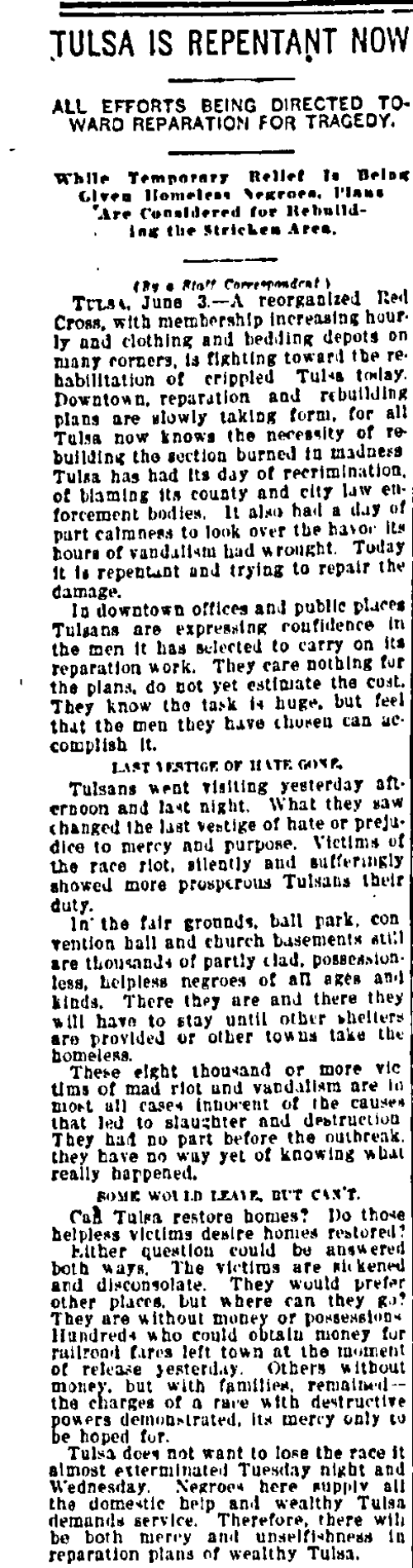
Wednesday, June 3rd
Tulsa does not want to lose the race it almost eliminated Tuesday night and Wednesday. Negroes here supply all the domestic help and wealthy Tulsa demands service. Therefore, there will be both mercy and unselfishness in reparation plans of wealthy Tulsa.
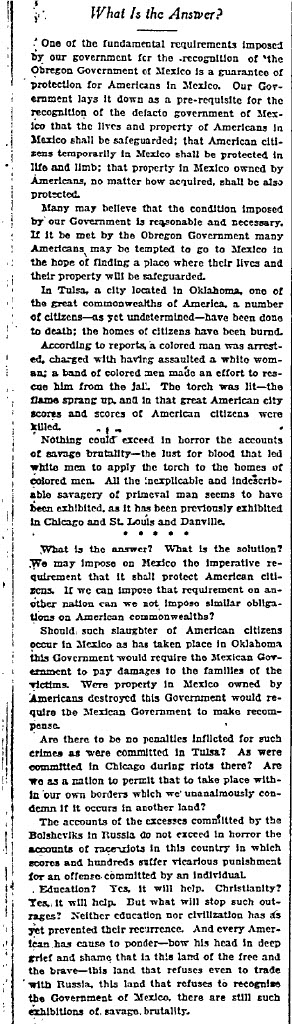
An editorial in the Lexington Herald (Kentucky) took a different position posing a difficult question challenging the government to explain why it failed at its most basic duty to protect Black Tulsans. "We may impose on Mexico the imperative requirement that it shall protect American citizens. If we can impose that requirement on another nation can we not impose similar obligations on American commonwealths?"
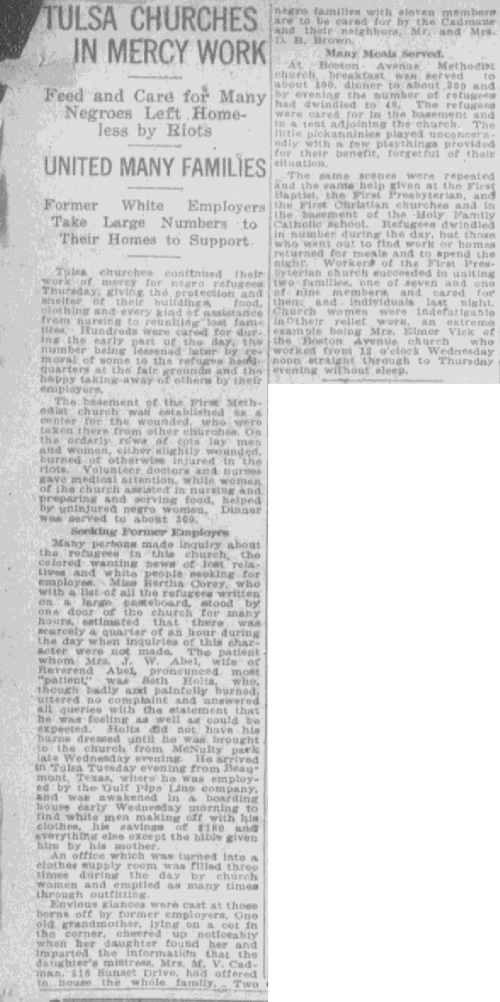
"Tulsa Churches in Mercy Work, Feed and Care for Many Negroes Left Homeless by Riots." This headline ran in the Tulsa World of June 3rd.
Churches organized rapidly to assist the victims as is reported. The account portrays the volunteers as selfless, doing the "work of mercy" but a critical reading reveals the inequality between the victims and volunteers. Of note is the following sentence from the article. "The little pickanninies [sic] played unconcernedly with a few playthings provided for their benefit, forgetful of their situation."
Thursday, June 4th
Headline, the Jackson Citizen Patriot: "Charge Negro Radicals Led in Tulsa War".
Street cleaning forces were busy today 'mopping up' the burned over district, much of the debris being pulled away. [unclear]Commissioner Steiner said that only two of 100 Negroes he offered employment at $3.60 a day, accepted. Upon that report and others, 'a work or be arrested' order was issued…
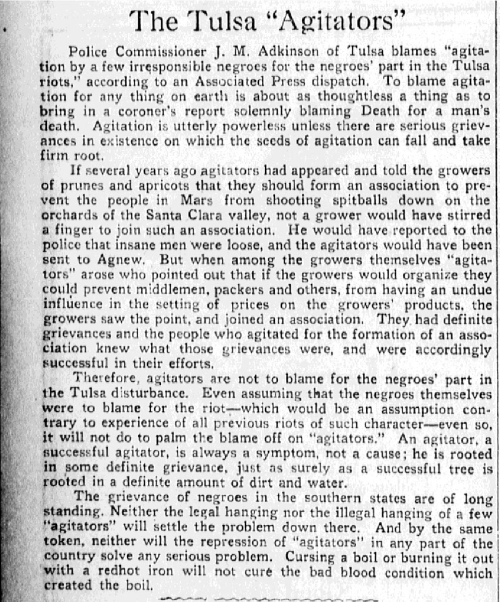
Agitation by a few irresponsible negroes was blamed for the part of the Negroes in the race [war] in statements by several prominent Negroes and Police Commissioner Adkinson. According to the commissioner, the police were aware that Negro radicals had been at work for some time.
We have known about agitation in the Negro section and Chief Gustafson and myself headed off what promised to develop into a serious situation a short time ago," he said. "We told a group of Negroes of the better class that we held them responsible for whatever should happen.
One of the "prominent Negroes", O.W. Gurley, said of the crowd at the courthouse "They were nearly all dope users, or 'jake' drinkers with police records. There were a few more intelligent ones in the lead. The real leader of the gang was a tall Negro who came back from France with exaggerated ideas concerning equality."
W.E.B. Du Bois was one of the "irresponsible negroes" who had recently visited Tulsa.

Saturday, June 6th
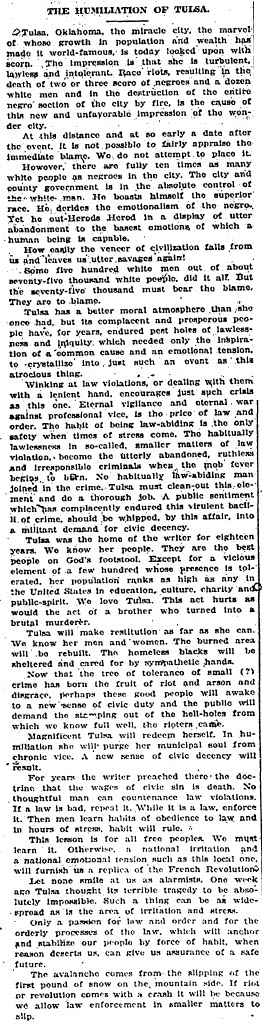
The June 6th issue of the Albuquerque Morning Journal published an editorial titled "The Humiliation of Tulsa." While the editorial asserts, "We do not attempt to place [the blame]," it postulates, "However, there are fully ten times as many white people as negroes in the city. The city and county government is in the absolute control of the white man. He boasts himself the superior race. He derides the emotionalism of the negro. Yet he out-Herods Herod in a display of utter abandonment to the beast emotions of which a human being is capable."
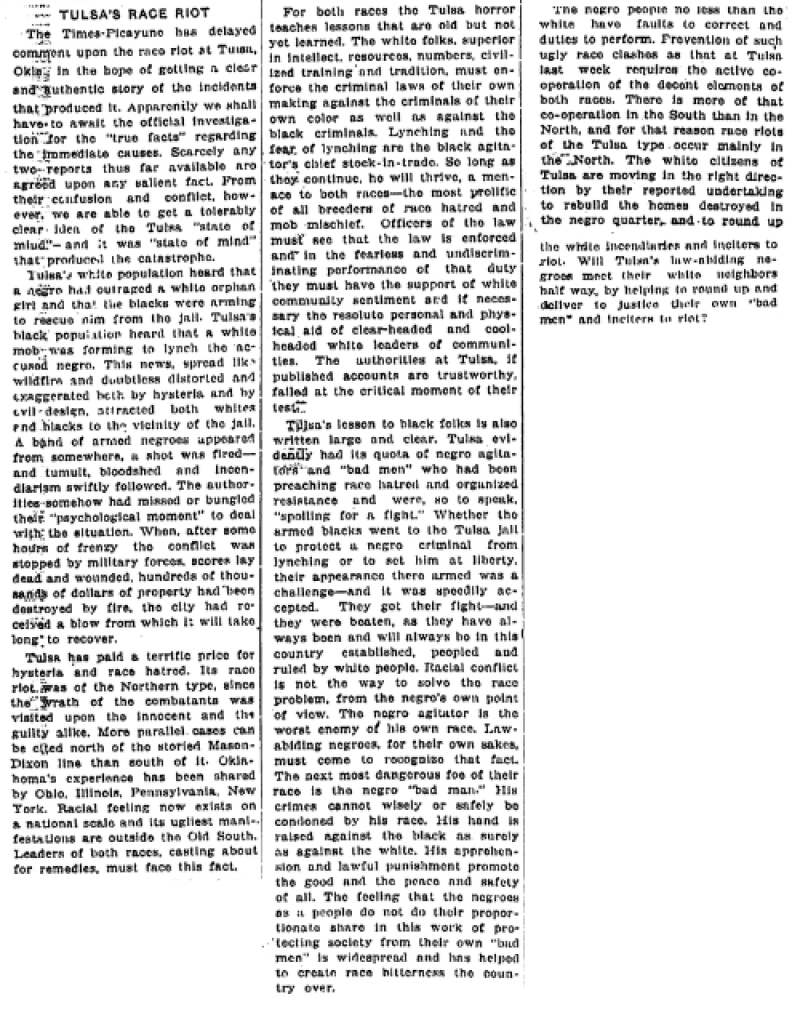
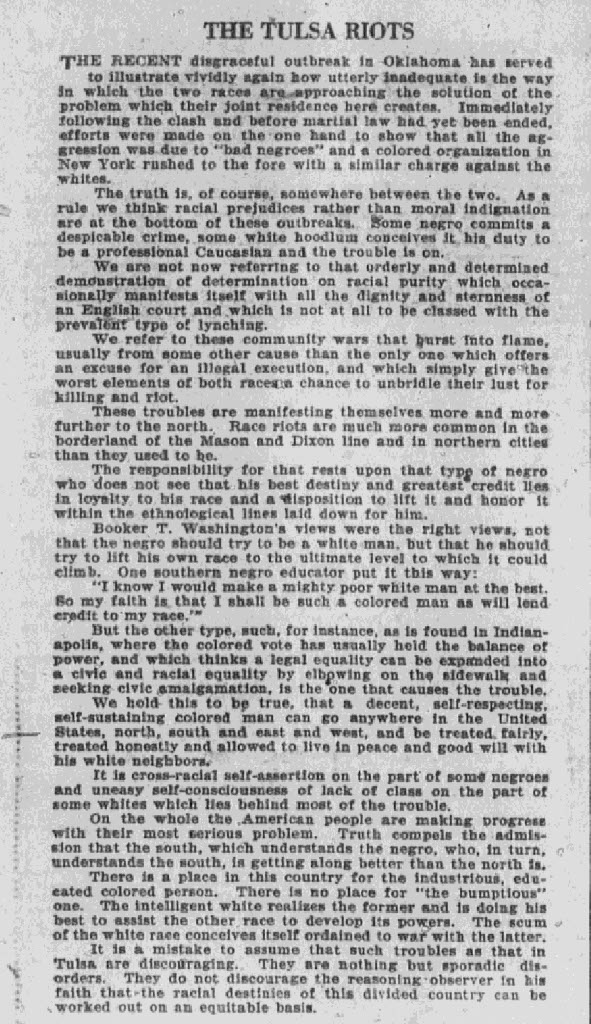
In closing, we offer three more editorials. It is instructive to read them in view of the history of race relations in the century since the massacre.