
"...the most debasing and detestable tyranny": Rhode Island Rebels Against the Empire
On the fourth day of May in 1776, the General Assembly of Rhode Island and the Providence Plantations cast aside their colonial shackles and declared themselves independent. The declaration came in the form of a law repealing the "Act for the more effectual securing to his Majesty the allegiance of his subjects in this his colony and dominion of Rhode-Island and Providence Plantations" and "altering the form of commissions of all writs and processes in the courts, and of the oaths prescribed by law."
The General Assembly justified their secession as a necessary act to protect the people of Rhode Island's lives, liberty, and property from the despotic George the Third. They wrote:
Whereas in all states, existing by compact, protection and allegiance are reciprocal, the latter being only due in consequence of the former; And whereas George the Third, King of Great-Britain, forgetting his dignity, regardless of the compact most solemnly entered into, ratified and confirmed to the inhabitants of this colony, by his illustrious ancestors, and till of late fully recognized by him – and entirely departing from the duties and character of a good King, instead of protecting, is endeavoring to destroy the good people of this colony, and of all the united colonies, by sending fleets and armies to America – to confiscate our property, and spread fire, sword, and desolation throughout our country, in order to compel us to submit to the most debasing and detestable tyranny; whereby we are obliged by necessity, and it becomes our highest duty, to use every means, with which God and nature have furnished us, in support of our invaluable rights and privileges, to oppose that power which is exerted only for our destruction.
The act continues:
And be it further enacted by this General Assembly, and by the authority thereof it is enacted, That in all commissions for offices, civil and military, and in all writs and processes in law, whether original, judicial or executory, civil and criminal, wherever the name and authority of the said king is made use of, the same shall be omitted, and in the room thereof, the name and authority of the Governor and company of this colony shall be substituted, in the following words, to wit, "The Governors and company of the English colony of Rhode-Island and Providence Plantations:" That all such commissions, writs and processes, shall be otherwise of the same form and tenor as they heretofore were; that the courts of law be no longer instituted nor considered as the King's courts; and that no instrument in writing, of any nature or kind, whether public or private, shall in the dated thereof mentions this year of the said King's reign.
Revolution was in the air.
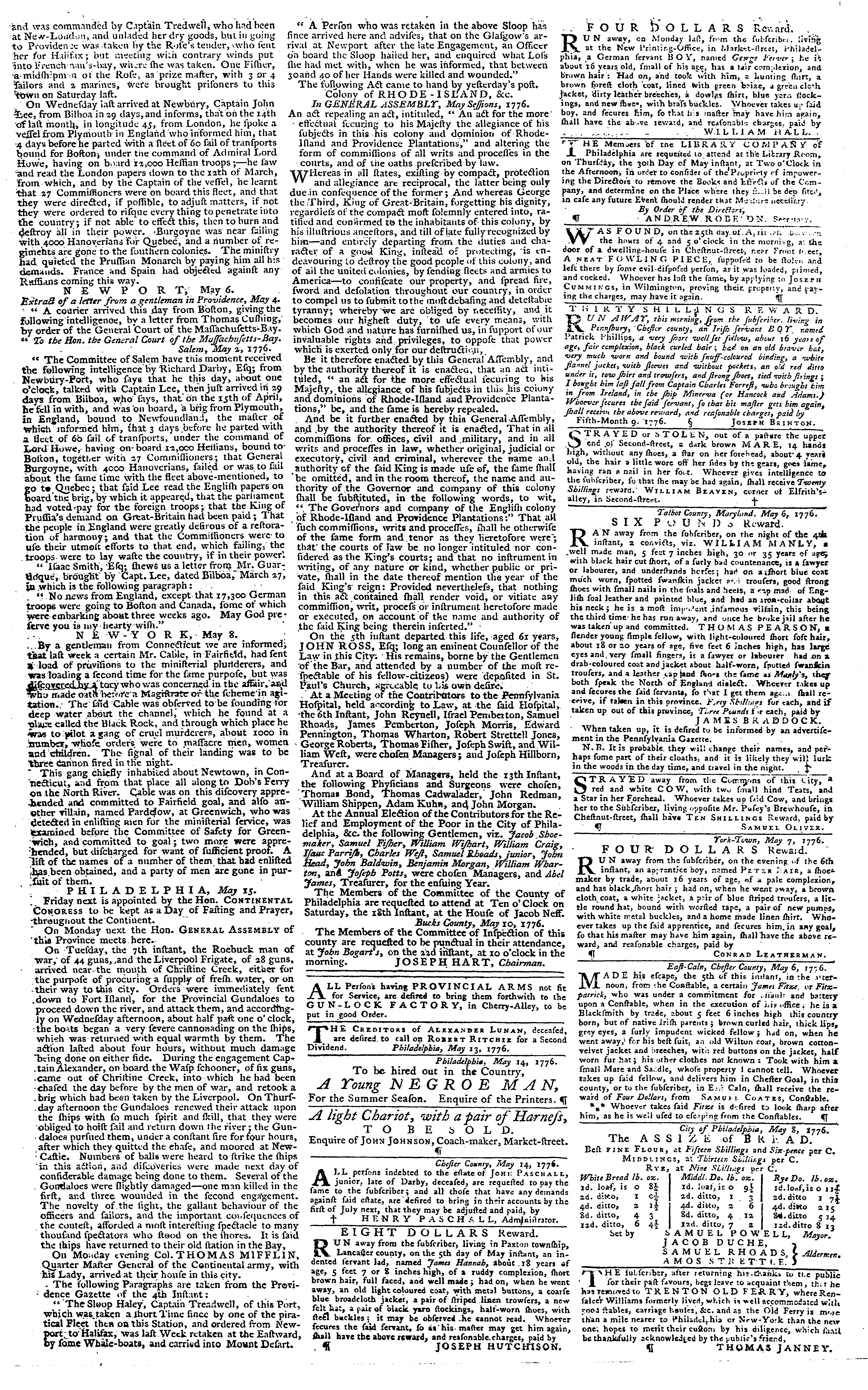
Read more declarations of independence from the colonies in Early American Newspapers, 1690-1922.
Explore more of the pivotal events that shaped the nation's path to independence.