
"Huzzah!" The Semiquincentennial of American Independence is Upon Us
First Posted January 2026
In June 1776, Thomas Jefferson, sequestered in a Philadelphia boarding house, drafted the Declaration of Independence as an "expression of the American mind." Just weeks later, on July 2, Congress voted for independence, formally adopting the Declaration on July 4.
At the ALA Annual Conference, June 26-29, in Chicago, Illinois, Readex recorded librarians, library supporters, and our staff reciting passages of the Declaration of Independence—bringing together many voices from the library community into one reading of the Declaration of Independence to celebrate America's 250th anniversary.
Watch the full reading on YouTube.
As Americans prepare to celebrate its 250th anniversary in 2026, Readex will commemorate the occasion with a series of articles exploring the pivotal events that shaped the nation's path to independence, which we will gather here.
Keep scrolling to find additional resources on Revolutionary America from the Readex Report archive.
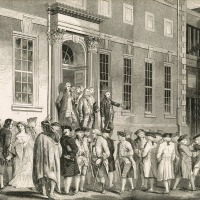
How did British colonists learn they were citizens of the United States of America in July and August 1776?
The news spread through broadsides enclosed in letters, newspapers passed between neighbors, and proclamations at local meeting houses.
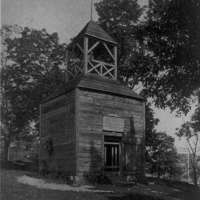
"A cry of defiance, and not of fear": Did Paul Revere Ride Alone?
We begin on the 4th of July 1776; the Second Continental Congress unanimously adopted the Declaration of Independence. However, it can be argued that the Revolution began in 1775—specifically, the night of April 18th and into the next day. Read more...
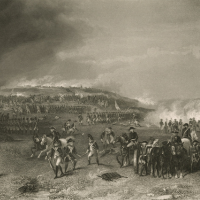
The recent Quarter Millennial (Semiquincentennial) celebration of the Continental Army is an opportunity to learn more about the role of the military in America at war and peace. Readex's U.S. Congressional Serial Set, provides a unique opportunity to explore this history. Read more...
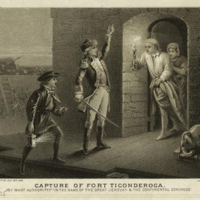
On September 25, 1775, Ethan Allen was captured following his failed attempt to wrest Montreal from the British. After his storied capture of Fort Ticonderoga (with Benedict Arnold!), Allen was instructed by the Continental Army to organize a local militia. Read more...
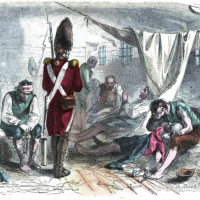
"Rebels! Turn out your Dead!": The Prison Ship Martyrs of the American Revolution
The modern rush of life in Brooklyn's historic Wallabout neighborhood is a stark contrast to the brutal history beneath the pavement. Just a stone's throw away is Wallabout Bay where, in the winter of 1779, the former hospital ship, HMS Jersey, was converted into a prison ship. This vessel would later become known as "Hell" by all who entered. Read more...
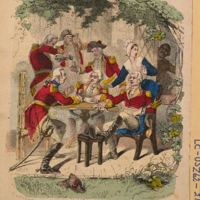
Beyond trained soldiers and officials, the Revolutionary War also relied on ordinary individuals—many of them women—who assumed specialized positions. Some were even spies themselves, staying close to home and lying low through the guise of being homemakers. Read more...
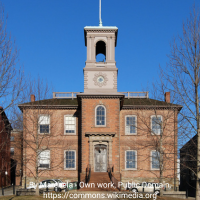
"...the most debasing and detestable tyranny": Rhode Island Rebels Against the Empire
On the fourth day of May in 1776, the General Assembly of Rhode Island and the Providence Plantations cast aside their colonial shackles and declared themselves independent. Read more...
Resources for Teaching & Research from the Readex Report Archive
Anticipating a National History for a New Republic by Michael D. Hattem
Benjamin Franklin: Empire Man or Radical Political Theorist? by Carla J. Mulford
"Forever Bear In Mind:" Spreading the News of Lexington and Concord by James David Moran
The Importance of Newspapers in Chronicling the American Revolution by Norman Desmarais
Of Presidents and Papers by Martha King
Puritan Amnesia and Secular Attitude: Newspapers and National Identity in Revolutionary America by Abigail Davis
Reading Between the Lines: Rediscovering the Home of a Founding Father by Lisa M. Minardi
Travel to New Worlds: Reconceptualizing Research and Early America with Early American Imprints by Kelly Wisecup
When Benjamin Franklin Came Home: A Look at the Media Coverage of His Return by Michael D. Hattem
Readex primary source collections deliver a rich and unfiltered view into 18th and early 19th-century America.
Newspapers, books, pamphlets, broadsides, and ephemera vividly capture the daily life, politics, and culture of European colonists and early Americans.
The full arc of early American history emerges in the narratives, literature, correspondence, and records by and about African Americans, Native Americans, and women.